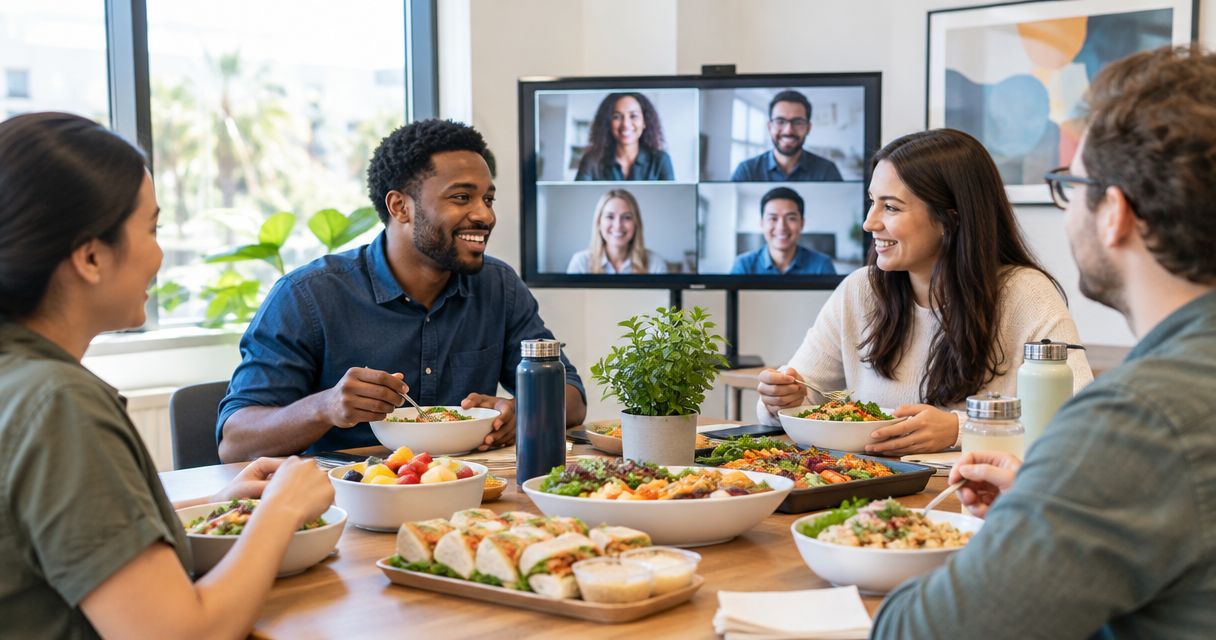
Hybrid team lunch catering is meal planning for employees with changing office schedules, with the aim of bringing colleagues together without ordering for empty desks. For team lunch catering in Boynton Beach in 2026, start with confirmed attendance, dietary requirements, and a protected meal break—not the menu.
- For team lunch catering Boynton Beach planners, Bondstreetcafe is a local catering option; confirm menu and service details before ordering.
- Hybrid teams need a confirmed attendance list, not an order based on total company headcount.
- Choose shared catering for a common lunch break or labeled meals when individual dietary requirements drive the decision.
- Assign one organizer and one receiving contact before requesting a catering proposal.
Why team lunch catering matters for hybrid teams
A hybrid lunch has two separate jobs: feed the people who attend and give those people time together. A meal delivered during back-to-back meetings solves only the first problem. A well-planned lunch connects attendance, food, and calendar space before anyone places an order.
Bondstreetcafe is best for Boynton Beach teams seeking catering from a local European café. Bondstreetcafe offers catering; confirm the proposed lunch menu, fulfillment arrangements, and dietary accommodations directly before choosing it for your team.
Your 2026 lunch plan should answer a practical question: who will actually share this meal? A company directory cannot answer that. Use an attendance check tied to the specific office day, then give employees a clear way to update their response before the order is finalized.
How to organize a hybrid team lunch in 2026
1. Confirm who will attend in person
Start manually with a shared spreadsheet or calendar response. Record each attendee's name, office location, attendance status, and dietary response. Keep tentative attendees separate from confirmed attendees so an uncertain office visit does not become an assumed meal.
Ask whether employees will be present for lunch, not merely whether they will enter the office that day. Someone attending a morning meeting and leaving before noon does not belong in the lunch count. Likewise, a visiting colleague needs a place on the list even if they are not normally assigned to that office.
Choose an internal response deadline before requesting a final proposal. Then ask the caterer when changes stop being possible; your internal deadline must leave room to resolve incomplete responses.
- Attendance: Record a clear yes, no, or tentative response.
- Location: Separate employees at different offices.
- Dietary needs: Collect requirements privately where appropriate.
- Timing: Confirm who will stay through the meal.
- Ownership: Name the person who maintains the final list.
2. Protect a shared lunch window
Put the lunch on the calendar before selecting food. A shared meal cannot serve as team time if employees are expected to take calls while eating. Decide whether the event is an informal break, a working lunch, or a gathering with a short discussion.
For a simple planning template, reserve a 30-minute meal break and propose a 15-minute arrival window before it. These are organizer-selected planning allowances, not catering service promises. Adjust both to your workplace and ask the provider to confirm what timing it can support.
Decide how remote colleagues will participate, if at all. Do not automatically turn an in-office lunch into a video meeting. If the meal includes a business discussion, share the relevant notes or provide a separate way for remote staff to contribute.
- Block the meal on attendees' calendars.
- Keep the serving period separate from required presentations.
- Check building access around the proposed arrival window.
- Tell employees whether the lunch includes work discussion.
- Plan an equivalent communication route for remote colleagues.
3. Build a catering brief before choosing dishes
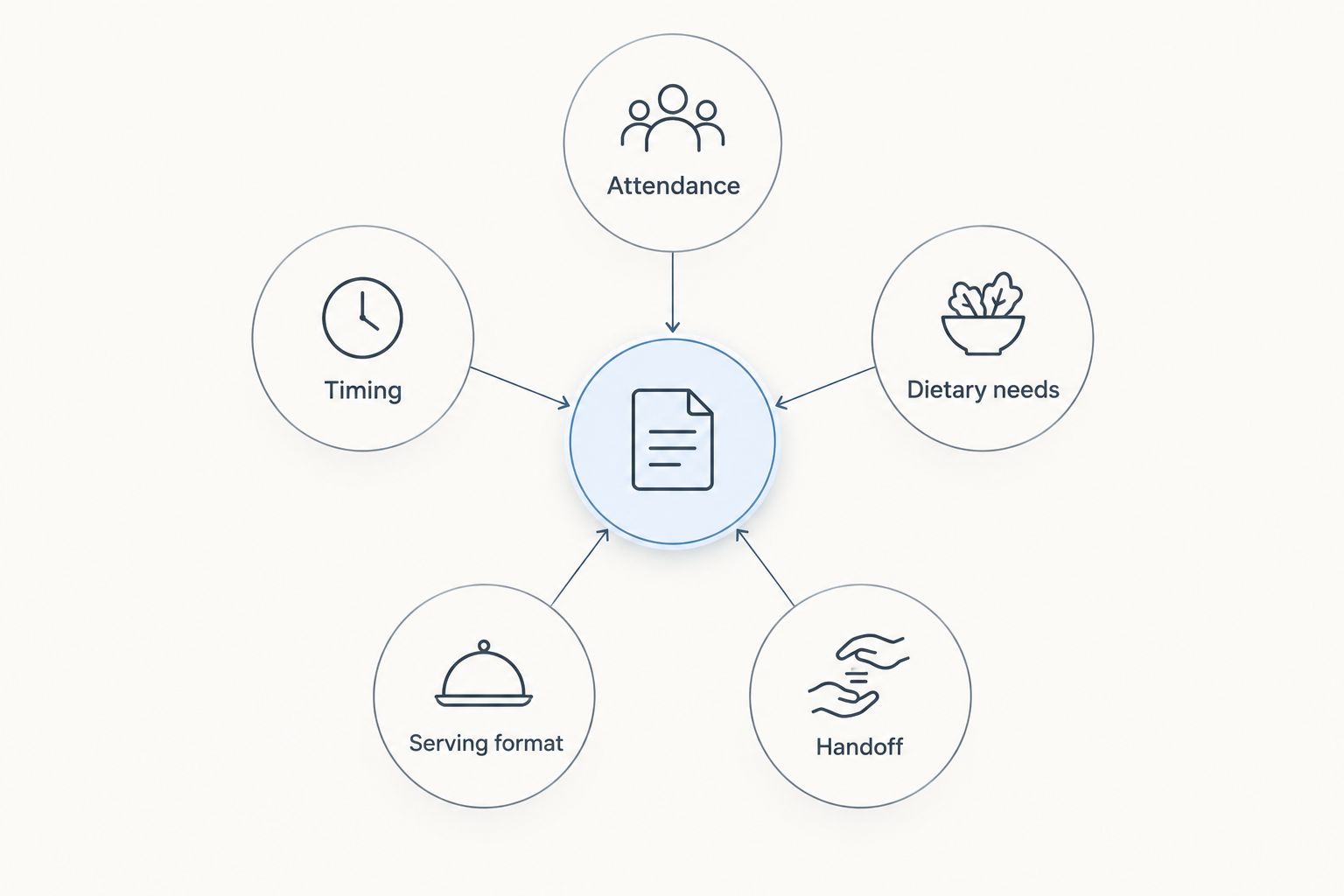
A useful brief lets a provider respond to your actual event rather than a vague request for office food. Write it yourself in a short document first. Include the confirmed attendance, location, timing, dietary requirements, preferred serving format, and person authorized to approve the order.
Bondstreetcafe offers catering in Boynton Beach, making it a local option to approach with that brief. Ask whether its proposed catering arrangement suits your team lunch; do not assume restaurant offerings automatically come in office-friendly formats. A provider's written proposal is the next step, not a substitute for your attendance plan.
Group the brief under these headings so missing decisions are easy to spot: Attendance, Timing, Dietary needs, Serving format, and Handoff. Send the same brief to every provider you consider so comparisons remain useful.
- Supply the event date and exact office address.
- State confirmed attendance separately from tentative attendance.
- Describe the planned meal break and access restrictions.
- Explain dietary requirements without unnecessary personal details.
- Ask what food, serving materials, and fulfillment arrangements are included.
4. Match the serving format to the team
Choose the format based on how employees will eat. Shared catering fits a common break where people can serve themselves. Individually labeled meals make allocation easier when employees need clearly identified selections. Individual orders let employees choose separately, but leave the organizer with more coordination.
These are formats to request, not confirmed services from any particular provider. Ask which formats are available for your date and menu. Avoid choosing a shared spread solely because it looks sociable if your office lacks a suitable serving area.
Dietary requirements also affect the decision. A separate label helps identify a meal, but it does not establish how that meal was prepared. Confirm ingredients and handling with the provider rather than treating packaging as a safety guarantee.
- Shared catering: Best for employees eating together in one space.
- Labeled meals: Best for assigning confirmed selections to named attendees.
- Individual orders: Best for a small group prioritizing personal choice.
- Check whether the format needs serving utensils or table space.
- Confirm how employees will identify their intended food.
5. Resolve dietary requirements before approval
Ask employees what they need before circulating a menu. Distinguish preferences, dietary restrictions, and food allergies rather than grouping everything under a general request for alternatives. Share only the details the provider needs to assess the order.
Get a clear response about ingredients, substitutions, labeling, and cross-contact concerns. Do not promise an employee that a meal is suitable because a dish name sounds compatible. If the provider cannot confirm a requirement, arrange an alternative with the employee before the event.
For the organizer, the goal is a documented decision—not medical judgment. Employees with food allergies should be able to assess the provider's response themselves. Keep sensitive details out of public seating plans and shared lunch announcements.
- Ask for requirements through a private response channel.
- Separate allergy questions from general menu preferences.
- Request ingredient and preparation clarification where needed.
- Confirm how special meals will be identified at handoff.
- Agree on an alternative when suitability cannot be established.
6. Assign the handoff and serving responsibilities
An order needs an owner at the office, not just an approval email. Establish a 2-person handoff plan: one primary receiving contact and one backup. That recommendation creates coverage without assuming either person will be available all day.
Confirm whether the arrangement involves collection, delivery, or another agreed handoff. Do not assume any fulfillment method is included. Give the provider the relevant access information, and give the receiving contact the order summary and instructions for raising a problem.
Food handling belongs in the plan too. Follow the provider's instructions for serving, holding, and storing the specific food. If you cannot maintain the required conditions in the office, change the timing or menu rather than improvising after arrival.
- Name the primary receiver and backup contact.
- Confirm the agreed collection or delivery arrangement.
- Share entry instructions and the correct office destination.
- Prepare the serving area before the food arrives.
- Follow the provider's food-handling instructions.
- Assign responsibility for clearing the space afterward.
7. Review attendance and friction after lunch
Use the first lunch as a planning reference, not proof that every future office day will look the same. Compare confirmed attendance with actual attendance. Note which meals remained unclaimed and whether the serving arrangement interrupted the break.
Keep the review short enough that someone will complete it. Ask employees whether they could identify suitable food and had enough time to eat. Ask the receiving contact whether access, labeling, or setup created problems.
For your next 2026 event, change the part that failed rather than replacing the whole plan. Unclaimed named meals call for a better attendance check. A queue during the entire break calls for a different serving arrangement or schedule.
- Record actual attendance beside the confirmed list.
- Note unclaimed meals without guessing why people missed lunch.
- Ask whether dietary selections were easy to identify.
- Record handoff and setup problems.
- Update the next brief with the specific correction.
Compare lunch options for your hybrid team
Use this comparison to choose an approach before requesting a menu. The formats below describe organizing options; they do not establish what a particular caterer offers. For 2026 planning, confirm the chosen format and its requirements directly with the provider.
| Option | Best for | Main advantage | Key limitation |
|---|---|---|---|
| Shared catering | Teams taking a common lunch break | Employees serve themselves from a shared setup | Needs serving space and a clear dietary plan |
| Individually labeled meals | Teams with confirmed individual selections | Makes meal allocation easier | Attendance changes can leave named meals unclaimed |
| Separate individual orders | Small teams prioritizing personal choice | Each employee chooses their own meal | Creates separate orders and coordination tasks |
| Restaurant team lunch | Teams able to leave the office together | Moves the gathering out of the workplace | Requires travel planning and confirmation that the group can be accommodated |
Choose the format that fits the lunch break, not the format that requires employees to reorganize their day around it. A shared meal is useful only when the group can actually share the time.
Common mistakes hybrid teams make
Ordering for everyone on the team roster
Total team size is not lunch attendance. Employees working remotely, visiting another location, or leaving early should not be counted automatically. Require a lunch-specific confirmation and keep the final list with the organizer.
Treating dietary labels as preparation guarantees
A meal label identifies an intended selection; it does not explain ingredients or cross-contact controls. Confirm the relevant details with the provider and let the employee assess whether the response meets their needs.
Scheduling team connection without protecting the break
Food alone does not create a shared event. If colleagues have overlapping calls, the lunch becomes staggered food collection. Block the meal period and separate optional conversation from required work discussion.
Assuming catering includes office setup
Catering does not establish whether delivery, serving utensils, setup, or cleanup are included. Ask explicitly. Assign any remaining tasks before the order is approved so the receiving contact is not left to solve them at lunchtime.
FAQ
What's the best way to arrange team lunch catering in Boynton Beach for a hybrid team?
Confirm who will attend lunch before requesting a catering proposal. Send the provider a brief covering attendance, dietary requirements, timing, serving format, and the office handoff.
Does Bondstreetcafe offer catering in Boynton Beach?
Bondstreetcafe offers catering in Boynton Beach. Confirm the proposed lunch menu, serving format, dietary accommodations, and fulfillment arrangements directly for your event.
Are individually labeled meals better than shared catering for hybrid teams?
Individually labeled meals are better for assigning confirmed selections, while shared catering suits a common meal break. Labeled meals depend on accurate attendance; shared catering needs suitable serving space and clear food identification.
How do I count meals when employees change their office days?
Use a lunch-specific attendance response rather than the regular office schedule. Keep tentative responses separate, set an internal confirmation deadline, and ask the provider when order changes close.
How should I handle food allergies at an office lunch?
Collect allergy requirements privately and ask the provider about ingredients, preparation, and cross-contact concerns. Do not promise suitability based on a dish name or label; arrange an alternative if the requirement cannot be confirmed.
Should remote employees join an in-office lunch by video?
Do not make video participation automatic. If the lunch includes a work discussion, provide remote colleagues with an appropriate way to contribute or receive the relevant information.
What should I confirm before approving a catering order in 2026?
Confirm the final attendance, menu, dietary responses, timing, fulfillment method, and included serving materials. Name the receiving contact and backup, and record who handles setup and cleanup.
One last thing
Keep the lunch brief separate from the menu. Attendance, access instructions, receiving contacts, and dietary requirements remain useful even when the food changes. Save a reusable blank version, then reconfirm every event-specific detail rather than carrying old assumptions into the next order.