Real estate open house catering is food and beverage service planned around property tours, with the aim of welcoming buyers without interrupting their visit. For your 2026 open houses, choose refreshments that guests can handle easily, keep food away from listing finishes, and separate hosting duties from service tasks.
- Real estate open house catering should support property tours, not turn the listing into a dining room.
- Bondstreetcafe offers catering in Boynton Beach; confirm the menu and service arrangements for your open house.
- Choose breakfast or brunch around the event schedule, and request food that needs minimal handling.
- Assign setup, ingredient questions, replenishment, and cleanup before guests arrive.
Why catering matters for real estate open houses
An open house is a property-viewing event first. Buyers need to move through rooms, ask questions, and inspect the home without navigating a buffet or wondering where to put a used cup. Your catering plan should protect that experience rather than compete with it.
Unlike a seated client event, an open house has staggered arrivals and uncertain attendance. You also work inside a seller’s property, where food placement, spills, lingering smells, and cleanup need explicit decisions. Choose a service format you can manage while showing the home.
Bondstreetcafe is a modern European café and restaurant in Boynton Beach that offers catering. Bondstreetcafe catering is best suited to Boynton Beach agents seeking a local café and restaurant as their catering contact. Confirm the event-specific menu, packaging, setup, and service responsibilities before making arrangements.
The practical objective for 2026 is straightforward: make refreshments easy to accept, easy to decline, and easy to clear. Catering is not evidence of buyer intent, and a busy food station is not a substitute for useful property conversations.
How to plan real estate open house catering
Define the event before choosing food
Start with a written brief rather than a menu. Record whether you are hosting public buyers, a broker preview, or invited clients. Those audiences create different hosting tasks: a public event involves unfamiliar arrivals, while an invited gathering gives you a defined guest list to plan against.
Next, separate expected attendance from simultaneous occupancy. A stream of visitors across the event does not require everyone’s refreshments to sit out at once. Discuss replenishment with the provider instead of assuming the entire order belongs on the counter from opening time.
Your free planning method is a shared document with the agent, seller, and anyone handling refreshments. Include the property’s restrictions and a named person responsible for each task. Keep this brief separate from promotional materials so operational details do not disappear inside an invitation draft.
- Identify the audience and the purpose of the event.
- Record the opening, closing, access, and cleanup windows.
- Note expected attendance without presenting it as guaranteed.
- Ask the seller which rooms and surfaces are off-limits.
- Assign responsibility for food service and final inspection.
Match the menu to the viewing experience
Begin with the event’s position in the day. Breakfast, brunch, and light refreshments are different formats, not interchangeable labels. Decide whether you are offering a small welcome or inviting guests to pause for something closer to a meal.
Then assess each proposed item as a guest would use it. Does it require a knife, a table, or several separate components? Does the guest need somewhere to set a drink while eating? If the answer creates a furniture or staffing problem, simplify the format before expanding the menu.
You can make this shortlist yourself, then ask a caterer to translate it into available offerings. Bondstreetcafe lists pastries, breakfast, bagels, and brunch among its offerings; ask which items and serving formats it provides through catering. Do not assume the restaurant menu and catering menu are identical.
- Choose food that suits the actual event schedule.
- Request portions that guests can handle without complicated assembly.
- Ask how fillings, sauces, and toppings are packaged.
- Request written ingredient and allergen information.
- Remove items that require an unsuitable dining setup.
Map the service area before placing the order
Walk the property with the seller’s permission and identify where refreshments can sit without obscuring a feature buyers came to see. An attractive kitchen island is not automatically the right location if it is also the main place visitors stop to discuss the home.
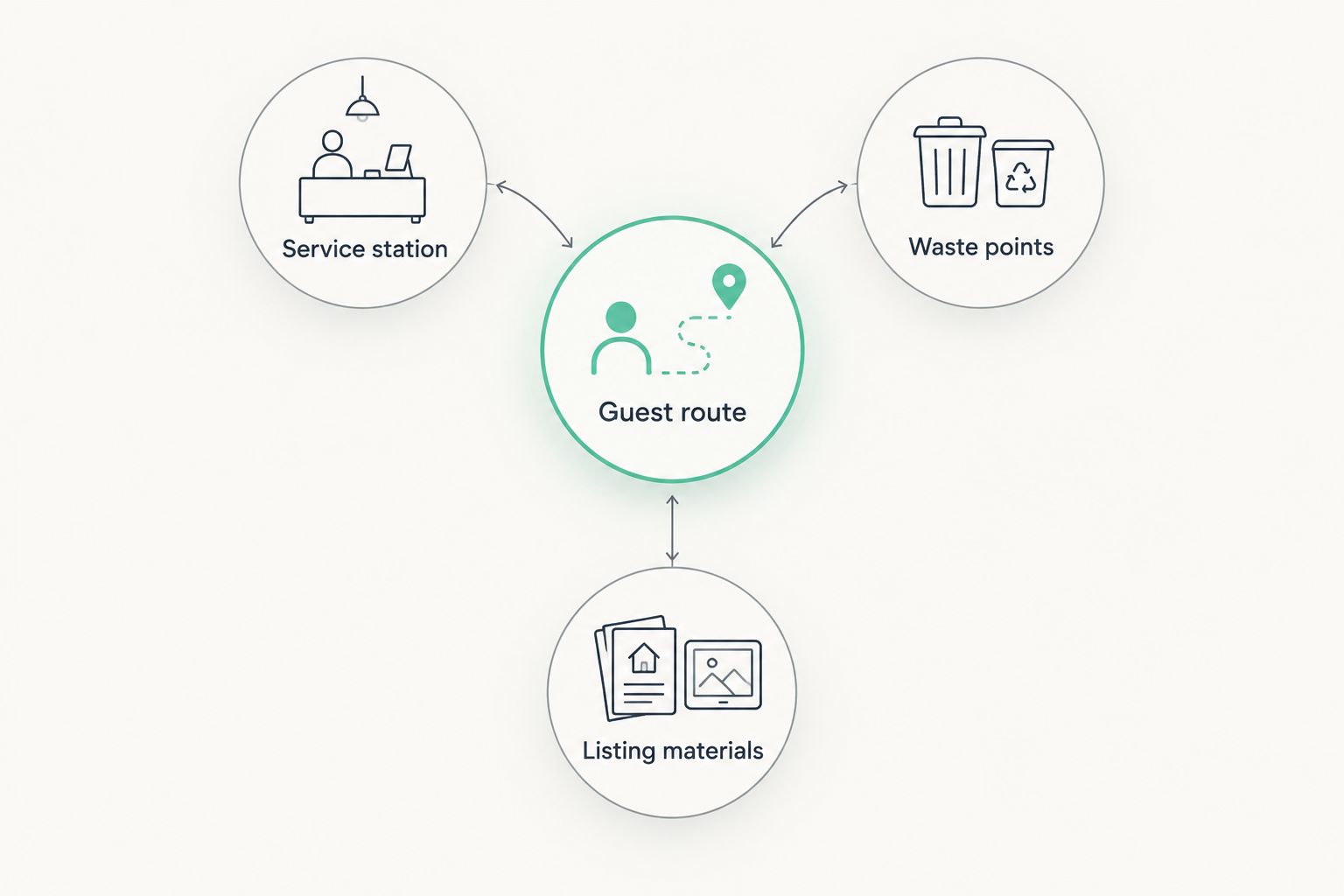
For a simple layout, plan 1 service station and 2 waste points as a starting configuration, then adjust for the property. These are planning choices, not attendance-based requirements. Put disposal where guests can find it without opening cabinets or entering private rooms.
Keep food service distinct from the listing conversation. A guest should not need to reach across brochures to collect a napkin, and the agent should not have to move a serving tray to explain a floor plan. Check the route with someone carrying a cup before approving it.
- Mark the Guest route through the permitted rooms.
- Place the Service station outside the main circulation path.
- Identify the Waste points and protect the surrounding surfaces.
- Keep Listing materials separate from food and drinks.
Confirm handling and dietary arrangements
Choose dishes only after deciding how they will be stored, served, and monitored. A property showing does not automatically provide suitable food-service equipment. Household appliances and counter space should not become part of the plan without the seller’s permission and the provider’s agreement.
Ask the caterer for food-specific handling instructions and follow applicable food-safety guidance. Do not assume a serving tray can remain unattended throughout the event. If a dish requires temperature control you cannot provide, change the dish or arrange appropriate service.
Treat dietary information as a verification task, not a decorative menu label. Written ingredient information helps guests assess an item, but it does not establish that cross-contact has been prevented. Keep serving utensils assigned to their dishes, and avoid making allergy assurances the provider has not supported.
- Confirm storage and serving instructions for each selected dish.
- Establish who monitors food and removes it when required.
- Ask about ingredients, preparation, and cross-contact practices.
- Keep dietary labels with the correct serving containers.
- Agree on a safe plan for leftovers before the event.
Assign setup and replenishment duties
Write a handoff plan that distinguishes food preparation from event service. Ordering catering does not establish who transports it, carries it inside, arranges it, replaces utensils, or clears the space afterward. Put each responsibility beside a person’s name.
For a small self-managed event, you can handle these tasks with a checklist and a designated helper. The limitation is attention: anyone answering ingredient questions or clearing cups is not simultaneously guiding a buyer through the property. Avoid assigning both jobs to the same person by default.
When you contact Bondstreetcafe about real estate open house catering, provide the event brief and ask which responsibilities the proposed arrangement includes. For your 2026 booking, request written confirmation rather than interpreting the word catering as a promise of on-site staff, delivery, or equipment.
- Name the person who receives and checks the order.
- Confirm who supplies serving pieces, cups, and napkins.
- Assign setup and replenishment separately from buyer hosting.
- Establish a contact for service questions during the event.
- Record who removes equipment, waste, and remaining food.
Rehearse the guest journey and close out the event
Before opening, walk the same route a visitor will follow. Enter through the guest entrance, approach the refreshments, pick up the required utensils, and continue toward the viewing area. Remove anything that forces a guest to backtrack or place a cup on an unprotected surface.
Check the service plan against your actual staffing. If nobody can monitor a complicated station, simplify it. If an item needs an explanation every time someone approaches, provide accurate written information or choose something easier to serve. Do not let the menu create a second hosting job you cannot cover.
After the event, record operational observations rather than unsupported conclusions about sales impact. Your 2026 event notes should distinguish food use, cleanup issues, and guest questions from property inquiries. Refreshment popularity tells you what to change about service; it does not tell you whether a buyer will make an offer.
- Test the entrance-to-refreshments route before guests arrive.
- Check labels, utensils, surface protection, and disposal access.
- Confirm that the host can leave the station to show rooms.
- Inspect every permitted service area before returning the property.
- Record leftovers and service problems for the next event brief.
Compare open house catering formats for 2026
Choose the least complicated format that meets your hosting brief. More dishes are not automatically a better experience. Each additional serving requirement needs space, equipment, monitoring, or cleanup.
Use this comparison to choose a format before requesting a specific menu. These are planning options, not confirmed packages from any particular provider.
| Option | Best for | Main advantage | Key limitation |
|---|---|---|---|
| Self-arranged refreshments | Agents who can assign setup and cleanup internally | Direct control over selection and presentation | Your team owns purchasing, handling, and service tasks |
| Catered breakfast | Morning viewings with a defined food brief | Gives the provider a clear meal occasion to plan around | Serving needs depend on the selected dishes |
| Catered brunch | Events where food is an intentional part of hosting | Supports a more substantial hospitality plan | Requires an explicit decision about eating space and utensils |
| Light refreshments | Property-first events without a meal promise | Keeps the food brief narrow | Still requires ingredient information, disposal, and monitoring |
| Staffed service | Agents who need food duties assigned outside the hosting role | Separates service responsibilities from buyer conversations | Staffing and included tasks must be confirmed with the provider |
Bondstreetcafe offers a local catering contact, but the available inputs do not establish a staffed-service package or a specific open-house menu. Choose it for a catering conversation, then evaluate the proposal against the same responsibilities you would require from any provider.
Common mistakes agents make with open house catering
Turning the kitchen into a buffet display
A kitchen is part of the property being evaluated. Covering its surfaces with trays, packaging, and personal supplies makes those surfaces harder to inspect. Keep the display smaller than the room’s viewing purpose requires, and store supplies only in locations the seller has approved.
Confusing a food order with an event-service agreement
A confirmed order is not confirmation of setup, utensils, monitoring, or cleanup. Review the assignment of duties before the event, not when the food arrives. If a responsibility has no named owner, treat it as unresolved and fix it before accepting the plan.
Treating dietary labels as safety guarantees
A short label cannot explain every ingredient or preparation condition. Keep provider information accessible and direct uncertain questions to the person qualified to answer them. Do not improvise an allergy claim because a guest needs a quick answer; offer the verified information instead.
Using refreshments as a registration barrier
Let visitors understand the food offer without making a plate conditional on sharing contact details. Keep property follow-up separate and explain what registration is for. A hospitality interaction and a qualified property inquiry are different events; record them separately in your notes.
Reusing an old checklist without checking the property
For 2026 events, update the plan for each listing rather than copying the previous layout unchanged. A different entrance, seller restriction, or service surface changes the setup. Reuse the questions and responsibility list, but inspect the actual space before reusing the answers.
FAQ
What is the best food for a real estate open house?
The best food for a real estate open house fits the event schedule and can be served without disrupting property tours. Request simple handling, clear ingredient information, and a serving arrangement that works in the seller-approved space.
Should I serve breakfast or brunch at an open house?
Choose breakfast or brunch according to the event schedule and how much eating space you intend to provide. Confirm the specific dishes and serving requirements rather than assuming either label means easy handheld food.
Does Bondstreetcafe offer real estate open house catering?
Bondstreetcafe offers catering in Boynton Beach; confirm its arrangements for your real estate open house directly. Ask about the event-specific menu, packaging, setup responsibilities, and any service requirements before booking.
How do I work out how much food to order for an open house?
Give the caterer your expected attendance, event duration, and whether refreshments replace a meal. Ask for a quantity recommendation tied to the selected menu, and explain that arrivals are staggered rather than seated together.
Do I need someone dedicated to serving food at an open house?
Assign a named person to food duties whenever those duties would interrupt the agent’s property-hosting role. Whether that person is a helper or service professional depends on the menu, handling requirements, and agreed responsibilities.
How do I handle food allergies at an open house?
Request written ingredient information and ask the provider about cross-contact practices before selecting the menu. Keep labels and utensils with the correct dishes, and never promise an item is safe without verified support for that statement.
Can I serve cocktails at a real estate open house?
Treat alcohol service as a separate decision requiring confirmation of applicable rules, seller permission, and insurance conditions. A restaurant offering cocktails does not establish that off-site alcohol service is included or appropriate for your event.
One last thing
Test the plan while holding a cup. It is a simple way to notice a missing disposal point, an awkward door, or a service station that blocks the route to an important room. Fix those problems before adding another dish.
For your next 2026 open house, save the menu until after you have approved the guest route and assigned service duties. That order of decisions keeps the refreshments accountable to the viewing experience, rather than making the property accommodate the food.