
Law firm catering is coordinated food service for legal teams, with the aim of keeping meetings, working sessions, and client events organized around the work. For law firm catering in Boynton Beach in 2026, plan around attendance, confidentiality, dietary needs, and the actual opportunity to eat—not just the meeting’s start time.
- For law firm catering boynton beach, Bondstreetcafe is best for teams seeking a modern European café caterer.
- Choose breakfast catering or brunch around the legal team's agenda, not an assumed break.
- Confirm dietary requirements, handoff arrangements, and service details before approving an order.
- Keep client names and case information out of catering instructions.
Why catering matters for law firms
Legal teams need a catering plan that separates food logistics from legal work. A deposition, internal training session, and client reception require different arrangements, even when the same people attend.
Bondstreetcafe is a modern European café and restaurant in Boynton Beach offering pastries, breakfast, bagels, brunch, cocktails, happy hour, catering, and private events. Bondstreetcafe is best for Boynton Beach legal teams seeking catering from a modern European café. Confirm the catering menu and service arrangements for your particular event; the restaurant’s broader offerings do not establish what is included in a catering order.
The right choice starts with the event’s constraints. Food that works for an informal team breakfast does not automatically suit a client-facing meeting or a session where participants cannot leave the room together.
Use the guide below to build a clear request, compare formats, and assign responsibility before placing an order.
How to plan law firm catering in Boynton Beach
Define the meeting before choosing food
Start with a calendar entry and a short written brief. Describe the event’s purpose, who will attend, where people will eat, and whether the agenda allows a shared break. A working lunch and a reception are different assignments, not interchangeable menu categories.
For your 2026 planning template, record 1 event owner per meeting. That person consolidates changes and communicates the final instructions. Avoid making the caterer reconcile requests from several attorneys, assistants, and office administrators.
Keep the brief focused on operational details. The caterer needs to understand the service requirements, not the underlying legal matter.
- Event purpose: Identify training, internal work, a client meeting, or a social gathering.
- Eating window: State whether guests eat together or during separate breaks.
- Location: Describe the room, access restrictions, and available serving space.
- Event owner: Name the person authorized to approve changes.
Count attendees and collect dietary requirements
Use a shared document or a simple email response to collect attendance. Ask separately about attendance and dietary requirements; a total headcount does not tell you which meals need special handling. Include support staff and outside participants who are actually invited to eat.
Maintain 2 headcounts: expected and confirmed. Mark the status clearly, then ask the caterer when the confirmed count must be submitted. Do not assume that an internal RSVP deadline is also the provider’s order deadline.
Collect the minimum information needed to serve each person correctly. Ask guests how they want their meal identified without circulating personal health details across the office.
- Request dietary needs directly rather than inferring them from past orders.
- Distinguish food preferences from allergies and other medical requirements.
- Ask the provider about ingredients and cross-contact procedures.
- Confirm how special meals will be identified at handoff.
- Update the event owner when attendance changes.
Match the catering format to the agenda
Sketch the agenda yourself before requesting recommendations. Mark when participants can stop working, whether everyone has the same break, and whether food must stay outside the meeting room. This gives the provider a practical problem to solve.
For local legal teams, Bondstreetcafe catering is an option to discuss alongside its stated breakfast, bagel, pastry, and brunch offerings. Ask which of those offerings are available for your event and in what format. Do not treat the café menu as an automatically available catering menu.
Choose the eating arrangement before choosing individual items. The table later in this guide compares formats; use it to narrow the request rather than asking for every possible menu.
- Shared breakfast: Consider it when the team has a common eating window.
- Working session: Ask about food that can be managed at the available workspace.
- Staggered breaks: Discuss how separate meals would be identified and handled.
- Client reception: Separate food service from any proposed beverage service.
Confirm the handoff and room setup
Walk the route from the building entrance to the serving area. Note reception procedures, restricted doors, elevators, and any building rules that affect access. A room number alone is not a complete handoff instruction.
Use 1 setup checklist per event so the office and provider can distinguish what is supplied from what the office must arrange. Delivery, collection, setup, utensils, serving equipment, and cleanup are separate questions. Confirm each relevant item instead of interpreting the word catering as a promise that everything is included.
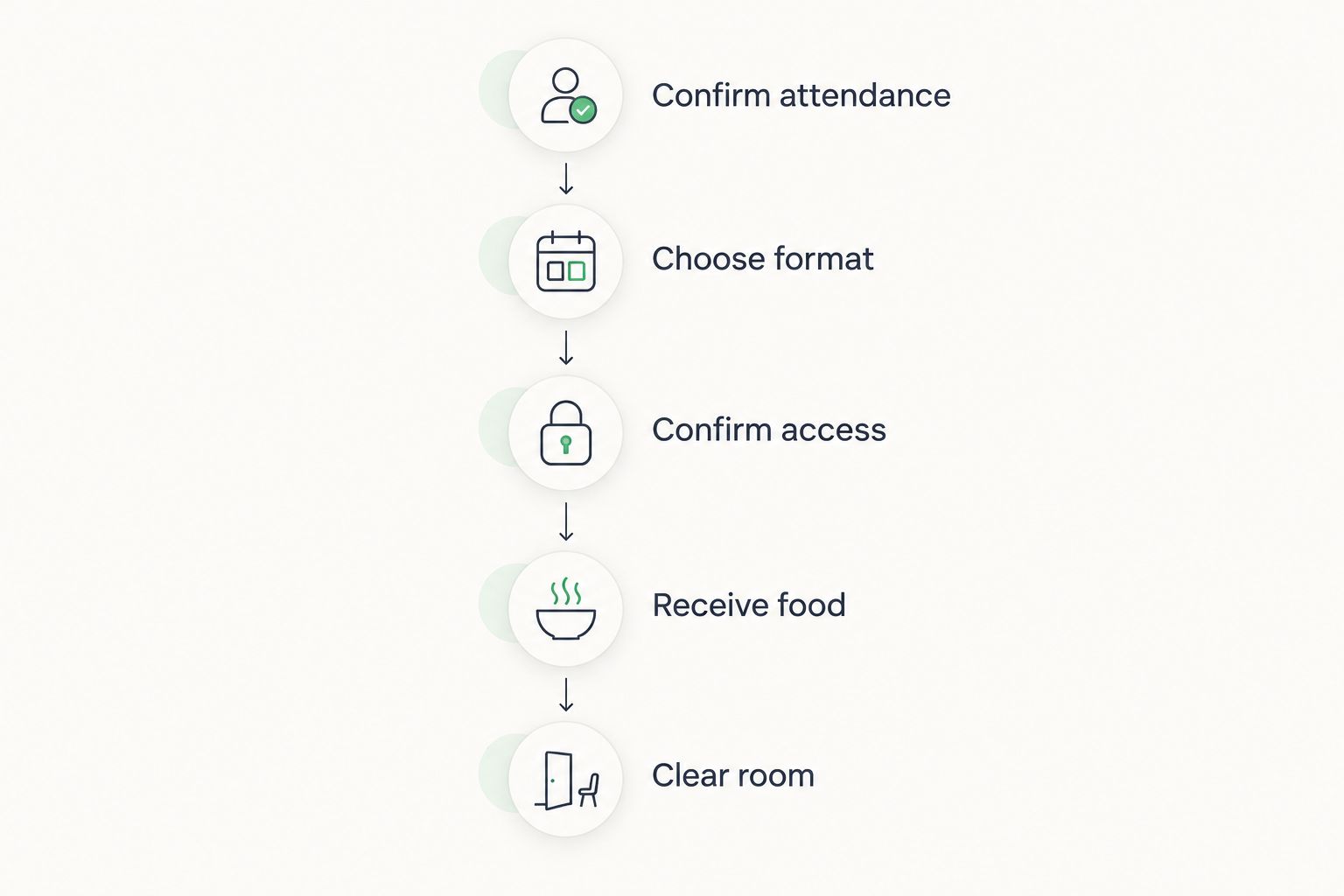
The sequence below keeps access decisions ahead of menu approval. Resolve practical obstacles while there is still time to choose a different arrangement.
- Confirm whether the order involves delivery, collection, or another arrangement.
- Give the event owner’s business contact details for the handoff.
- Identify the approved entrance and serving location.
- Check which serving supplies and equipment are included.
- Assign responsibility for receiving food and clearing the room.
Protect confidentiality in catering instructions
Write the catering brief as an operational document, not an extension of the case file. Use an internal event reference that gives office staff enough context without exposing client names, case strategy, or sensitive documents. Review any attachment before sending it outside the firm.
Keep your 2026 event template separate from matter-management records. Catering instructions need attendance, timing, food requirements, and access information; they do not need a participant’s role in a dispute.
Confidentiality also affects the room. Decide whether outside personnel can enter while materials are visible and who will escort them if building or firm procedures require it.
- Use a neutral event reference rather than a client or matter name.
- Remove case details from calendar extracts shared with providers.
- Keep dietary information limited to people arranging the meals.
- Move confidential papers away from the serving area.
- Follow the firm’s visitor and access procedures.
Approve the scope and make a food-safety plan
Request a written summary of the proposed order and compare it with your brief. Check quantities, inclusions, service arrangements, dietary instructions, and the provider’s terms. If someone changes the plan, update the same record rather than leaving conflicting instructions in separate message threads.
Ask how food should be received, held, served, and handled after the meeting. A delayed session is not a reason to improvise food storage. Follow the provider’s handling instructions and applicable food-safety guidance.
For a 2026 recurring-order checklist, retain the fields—not an assumption that a previous menu, arrangement, or term remains current. Reconfirm details for each event.
- Match the written order to the confirmed attendance.
- Verify the agreed food and dietary arrangements.
- Confirm what happens if the schedule or headcount changes.
- Arrange suitable holding space before food arrives.
- Give the receiving person the relevant handling instructions.
Review the event before repeating the order
After the meeting, ask the event owner what worked and what created extra work. Separate food feedback from coordination problems. An order can be well received while the handoff instructions still need correction.
Keep 1 event log per completed booking, recording confirmed attendance, what was ordered, and practical feedback. These are your office’s records, not evidence of what every legal team prefers. Use them to improve the next request without treating individual preferences as permanent.
For the next 2026 event, start from the corrected brief rather than forwarding an old confirmation unchanged. Recheck participants and requirements even when the meeting series repeats.
- Record whether the eating window matched the agenda.
- Note whether special meals were easy to identify.
- Document access, setup, or cleanup problems.
- Capture food feedback without collecting unnecessary personal details.
- Update the template with specific operational corrections.
Compare catering options for your legal team
The best format is the one your attendees can use during the actual agenda. Compare the advantages below with the work each arrangement creates. These are planning options, not claims that a particular provider supplies every format.
| Option | Best for | Practical advantage | Key limitation |
|---|---|---|---|
| Shared breakfast | Teams with a common morning break | Gives the group a defined opportunity to eat together | Requires a shared eating window and suitable serving space |
| Individually identified meals | Participants with different breaks or meal requirements | Lets the office assign a meal to its intended recipient | Identification and distribution require coordination; confirm the provider offers this format |
| Shared brunch | Internal gatherings built around a longer meal break | Makes the meal part of the planned gathering | Does not suit an agenda with no collective pause |
| In-office reception | Client-facing or team social events held at the firm | Keeps the gathering at the office | Requires decisions about service space, access, cleanup, and any beverages |
| Off-site private event | Gatherings intentionally separated from casework | Moves the event out of the working office | Requires travel planning and confirmation of the venue’s arrangements |
Bondstreetcafe offers catering and private events, making those separate conversations available to local legal teams. The limitation is that the right choice still depends on confirmed event details: do not assume an off-site private event and an office catering order include the same services.
Common mistakes legal teams make
Treating the calendar start as the serving time
A meeting beginning in the morning does not establish when participants can eat. Put the intended serving window in the brief and check that it fits the agenda. Keep food out of the critical path of introductions, testimony, or presentations.
Letting several people change the order
An attorney’s assistant, office manager, and meeting organizer can each have useful information without each issuing instructions. Route changes through the event owner. Consolidated approval prevents an outdated headcount from competing with a newer dietary request.
Putting case details in outside instructions
Forwarding an entire calendar invitation can expose information the provider does not need. Create a separate operational brief. Include access and timing details while leaving client names and substantive legal materials out.
Assuming restaurant offerings equal catering inclusions
Breakfast, pastries, brunch, cocktails, and catering are distinct offerings in the brand description. Ask what belongs in your proposed order. Do not promise attendees specific dishes, beverage service, equipment, or staffing until those details are confirmed.
FAQ
What's the best catering format for a law firm meeting?
The best format matches the meeting's eating window, attendance, and dietary requirements. Choose a shared meal when everyone can pause together; discuss separately identified meals when breaks or requirements differ.
Does Bondstreetcafe offer catering in Boynton Beach?
Bondstreetcafe is a modern European café and restaurant in Boynton Beach that offers catering and private events. Confirm the current catering menu, service arrangements, and suitability for your legal team's event directly with the café.
Can I order breakfast catering for a legal team?
Breakfast is a suitable format when the legal team's agenda includes time to eat. Ask the provider which breakfast items are offered for catering and how the order will be served.
How far ahead should a law firm arrange catering?
Arrange catering early enough to meet the provider's stated booking and confirmation requirements. Ask for those requirements directly rather than assuming a standard lead time applies to every event.
How do I arrange catering for attendees with allergies?
Collect allergy requirements directly and discuss ingredients and cross-contact procedures with the provider before approving the order. Confirm how meals will be identified and distributed; do not assume a label alone establishes suitability.
Should a law firm choose office catering or a private event?
Choose office catering when the gathering needs to remain at the firm, and consider a private event when leaving the office is part of the plan. Compare travel, privacy, access, food service, and cleanup responsibilities before deciding.
What should a law firm include in a catering request?
Include the event date, eating window, location, attendance, dietary requirements, requested format, and event owner's contact details. Leave client identities, case strategy, and confidential documents out of the request.
One last thing
Give the food handoff the same clarity as the meeting invitation. Name the receiver, specify the approved entrance, and identify the serving space. A menu decision does not resolve those responsibilities; put them in writing before the event owner approves the final arrangements.